
Some do, and those get treated properly, in one visit, in a color that matches your tooth. But cavity is not automatically a verdict, and you'll hear when watching one is the better call.
That's the part nobody explains. A filling doesn't last forever, and when it's eventually replaced, a little more tooth goes with it. Do that enough times over a life and you end up at a crown. So the first one is worth getting right, and worth not doing early.
Decay that's still in the outer enamel can often be halted, and sometimes reversed, with fluoride and a change to what's happening between meals. Once it's through into the softer dentin underneath, it doesn't heal, and waiting only makes the eventual filling bigger. Telling those two apart is the whole job.
So we photograph it, mark it, and compare it at your next visit rather than treating a shadow as a decision. You'll see the same image we're looking at, and if it hasn't moved, neither do we.

Usually twenty to forty minutes for a single tooth, and you leave with it finished.
Most fillings are comfortable with a small amount of local anesthetic. A very shallow one sometimes doesn't need any, and we'll offer you the choice rather than assuming.
We take out what's soft and leave what's sound. Composite bonds to the tooth, so unlike older silver fillings there's no need to cut extra shape into healthy enamel just to hold it in.
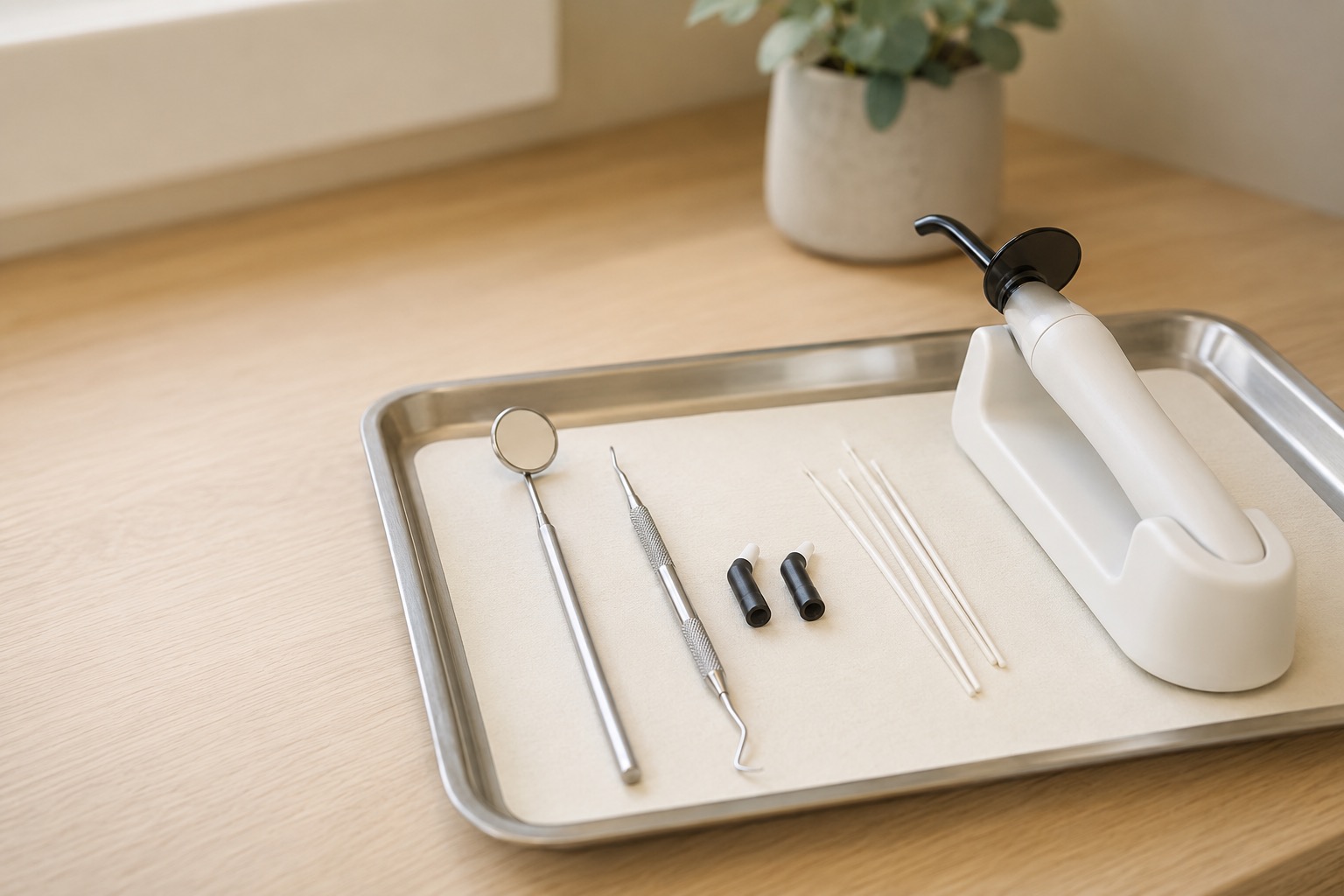
The composite goes in as layers, each one set with a curing light, and it's shaped to the tooth it's replacing. Matched properly, you won't be able to point to it afterward.
You bite down on marking paper so we can see if the filling sits high, and it gets adjusted until it feels like nothing. Say something if it feels off, because a filling that's a fraction too tall gets sore fast.
A silver filling that's intact and sealed is doing its job. Being twenty years old isn't a reason to take it out.
We replace one when it's cracked, leaking, or decay has started underneath it, and we'll show you which of those it is.
If you want yours changed because of how they look, that's a perfectly good reason. We’ll let you make that call.
How big it is, mostly. A filling touching one surface of a tooth costs less than one wrapping around three. You'll get the number before we start, not after.
Fillings are among the better-covered treatments in most plans, often at a decent percentage once your deductible is met. We check your actual benefits beforehand.
See insurance & payment →A well-placed composite filling commonly lasts around a decade, longer in a small cavity, shorter in a large one or if you grind. Keeping up with checkups is what catches a failing one before it turns into a bigger job.
Not usually. The numbing pinch is the worst of it for most people, and after that you'll feel pressure and vibration rather than pain. Tell us if you feel anything sharp and we'll stop and add more.
Yes. Composite is fully set before you leave, so there's no waiting period. Just hold off until the numbness has gone, since it's easy to bite your cheek without realizing.
Some sensitivity to cold for a few days to a couple of weeks is common, especially with a deeper filling, and it settles on its own. Sensitivity that's getting worse rather than better, or pain when biting, is worth a call.
Early decay still confined to enamel can sometimes remineralize with fluoride and changes to how often you're snacking or sipping sugary drinks. Once it's through to the dentin, it doesn't reverse, and that's the point where waiting costs you more tooth.
Yes, and you don't need to feel awkward about it. Bring the X-rays if you have them. Dentists genuinely differ on when early decay is worth treating, and a second look costs far less than fillings you didn't need.
For the great majority of cavities, yes. Modern composites hold up well and preserve more of the tooth because they bond rather than wedge in place. For a very large cavity, we may suggest an onlay or a crown instead, and we'll explain why rather than just quoting a bigger number.
Keep exploring: All Services · Cleanings & Exams · Our Approach
An exam tells you what's actually there, and you'll see it on screen with us. Sometimes the answer is a filling. Sometimes it's a note to check again in six months.